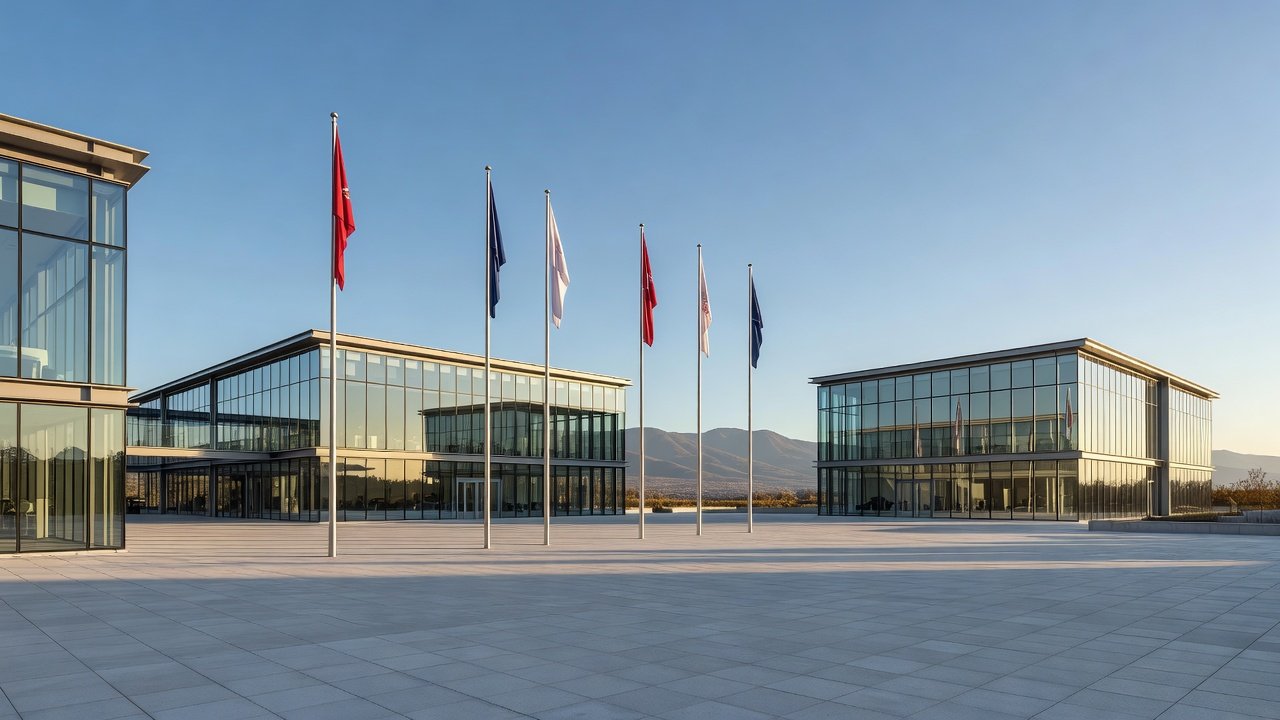
The 32nd ITS World Congress runs October 19–23, 2026 at Gangneung Olympic Park in South Korea, under the theme “Beyond Mobility, Connected World.” The venue is the legacy infrastructure from the 2018 PyeongChang Winter Olympics, repurposed for what the organisers describe as the largest intelligent transport systems event in the world.
The programme’s declared focus areas are automated driving and electric vehicles, smart infrastructure, mobility services, AI-driven and data-centric systems, and policy and governance. Parking does not appear in that list, which is the first useful piece of information for anyone in this sector planning to attend.
Where parking actually lives at this event
ITS World Congress has never been a parking show, and reading it as one produces disappointment. Parking appears at ITS in three places, none of them the main stage.
Inside the curb-management and data track. This is where the substantive content is. Curb digitisation, kerbside allocation policy, and the data standards underneath them have been the fastest-moving part of the parking-adjacent agenda for three years, and the audience at ITS — city transport agencies and their consultants — is the buying audience for it.
Inside automotive in-vehicle services. Parking data reaches drivers increasingly through the vehicle rather than through an app, which makes parking availability an automotive data procurement question. The automakers and tier-one suppliers at ITS are the customers in that transaction, not the parking operators.
In the exhibition, in the national pavilions. The UK–Europe pavilion and the other national delegations carry the smaller vendors, and this is usually where genuinely new hardware and analytics appear, as opposed to the platform announcements that come from the large exhibitors.
If your interest is enforcement systems, revenue control, or PARCS hardware, this is not your show — that content lives at IPMI and the national parking association events. If your interest is where parking data goes once it leaves your facility, this is the most concentrated gathering of the people who consume it.
What is likely to be announced, and how to read it
Congress announcements follow a predictable pattern, and the pattern is worth knowing before the press releases arrive.
Expect city pilot announcements. Host-country and host-city demonstrations are a fixture, and Korea has substantial deployed ITS infrastructure to show. These are real and they are also curated — a demonstration corridor is not a production deployment, and the distinction is rarely made in the announcement.
Expect data-partnership announcements between providers and automakers. These are commercially significant and technically thin. A partnership announcement tells you a commercial relationship exists; it does not tell you coverage, accuracy, refresh rate, or whether the data is sensed or predicted. Those are the questions that determine whether the data is usable, and they are answerable only by asking at the booth.
Expect AI framing on existing products. The programme’s AI-and-data-centric track guarantees that most exhibitors will describe their existing analytics as AI. Some of it genuinely is — occupancy prediction and computer-vision detection have both improved materially. Much of it is the same regression that shipped in 2022 with a new label.
Do not expect standards news. Standards bodies do not time releases to congresses, and the curb-data work that matters most has been moving on its own cadence through the Open Mobility Foundation rather than through ITS events.
Treat demonstration corridors as engineering, not evidence. The live demonstrations are the genuinely interesting part of a congress, and they are also the most heavily prepared infrastructure in the country for that week. A sensor array that performs perfectly on a closed demonstration loop in October says very little about how it performs on a working arterial in February. The right question at a demonstration is not whether it works but what was done to the site to make it work, and what of that is replicable at scale.
The three questions worth asking on the floor
For anyone attending with a parking remit, the value is in the conversations rather than the sessions, and three questions separate substance from pitch.
“What is your ground-truth validation method, and how often do you run it?” Any provider selling availability data should be able to describe how they verify it against reality, at what frequency, and in which cities. A provider who validates quarterly against physical observation is making a different product than one who validates against their own historical predictions.
“Which of these cities is a production deployment with a paying customer, and which is a pilot?” Deployment maps at this event are generous. The distinction between a signed contract and a memorandum of understanding is not usually visible on the map.
“What happens to my data, and who else do you sell it to?” For operators considering data partnerships with the automotive channel, this is the question that determines whether you are a supplier or a product. It is also the question most likely to produce a pause.
Whether it is worth the trip
For a North American parking operator, probably not on its own. The travel cost is substantial, the parking-specific content is a fraction of the programme, and the same vendor conversations are available at domestic events with a shorter flight.
For a city transport agency, a curb-management programme lead, or a technology provider selling into either, the calculus is different. The concentration of municipal transport buyers at ITS is higher than at any parking-sector event, and the curb agenda is moving through this audience rather than through the parking industry’s own channels. That is the structural reason the event matters to this sector: the decisions about how curb space gets digitised, allocated, and priced are being made by people who do not attend parking conferences.