The platform layer of smart parking has moved decisively to the cloud, and the commercial logic is easy to see: subscription pricing instead of a large upfront licence, remote access, and integrations that do not require anyone to visit a server cupboard.
The detection layer has been moving in the opposite direction. And the resulting architecture — local processing feeding cloud management — is the one most deployments are converging on, which makes “cloud versus on-premise” the wrong question to put to a vendor.
Why detection resists the cloud
The constraint is data volume, and it is worst exactly where the technology is most capable.
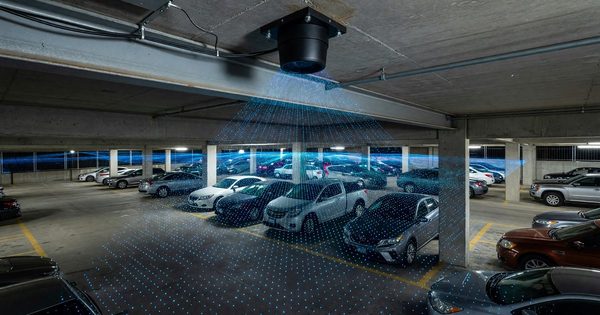
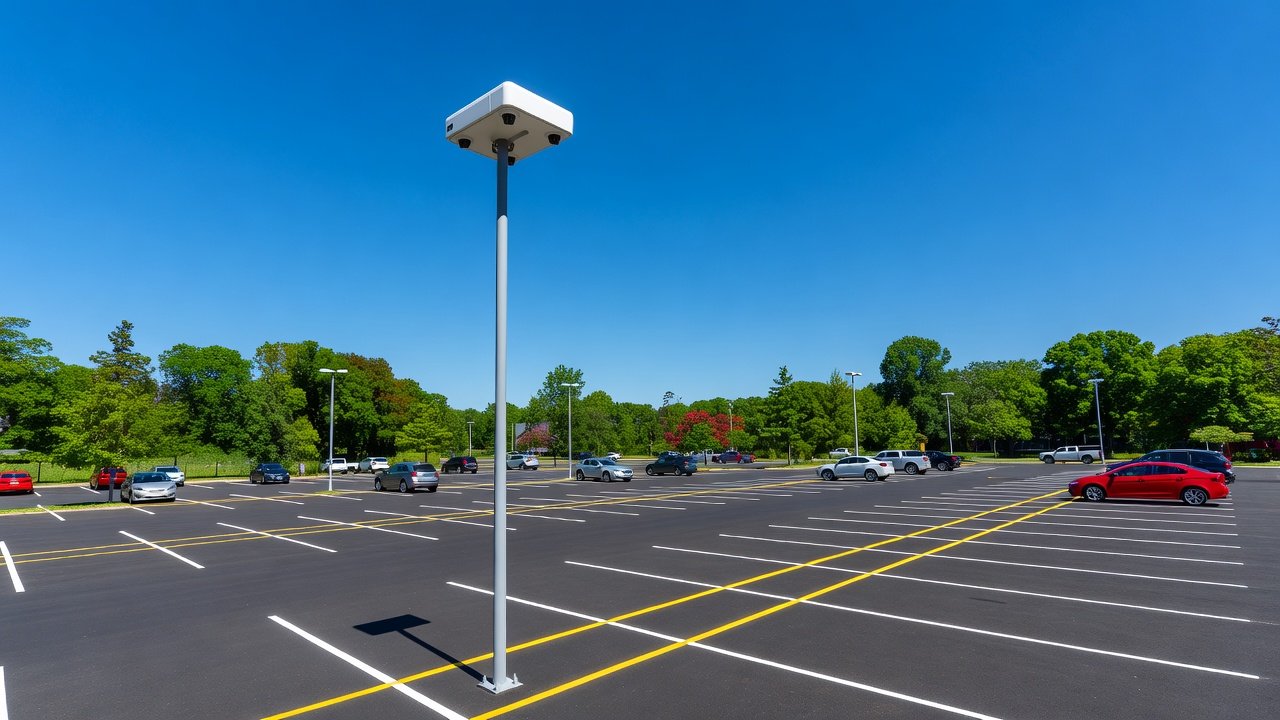
Camera-based and computer-vision detection generates heavy raw data. Cloud-based visual systems carry latency and require constant high-bandwidth connectivity, because the recognition has to happen somewhere and shipping video to it is expensive. Processing at or near the sensor — edge or fog computing — cuts latency, bandwidth, and energy consumption at once, because what leaves the device is a small structured occupancy event rather than a stream.
There is a second-order cost that catches operators out. Where sensors connect over cellular, transmission is metered. Data costs on SIM-based deployments can materially exceed the modelled figure once real video or high-frequency sensor traffic is running, and that overrun does not show up in the pilot because the pilot was small.
Local processing also delivers something the cloud cannot: the device keeps working when the connection does not. For guidance signage and real-time availability, an outage that blanks the display is a visible failure in the street.
What the cloud is genuinely better at
None of that argues for keeping everything local, and the case for cloud at the management layer is strong.
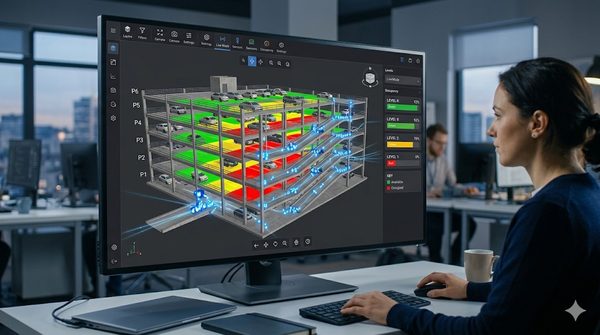
Cloud platforms bring computing capability no roadside device has, which is what makes more advanced analysis — demand modelling, cross-site pattern detection, prediction — practical at all. They remove local hardware maintenance. They make multi-site operation a single system rather than a set of them. And they turn integration into a configuration exercise rather than a project, which matters increasingly as curb data is exchanged between platforms.
The pricing shift is real but should be read carefully. Subscription pricing removes the capital hurdle and replaces it with a permanent operating cost. Over a sensor estate’s physical life — which is long — the total is frequently higher, and the decision is about balance-sheet treatment and flexibility rather than about being cheaper.
The architecture most operations land on
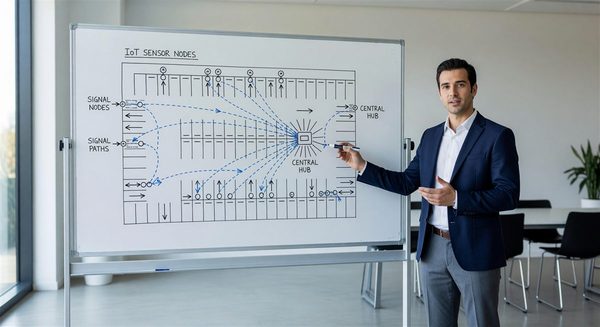
Hybrid deployments are increasingly the norm: core processing runs locally on facility hardware for resilience, while management reporting, remote access, and integrations run through cloud services.
The useful way to specify this is by layer rather than by product:
- Detection and immediate response — local. Occupancy determination, guidance signage, anything a driver sees in the moment.
- Aggregation, analytics, reporting, integration — cloud. Anything that benefits from scale or needs to reach multiple sites and third parties.
- Transaction and enforcement records — wherever the audit requirement says, which is usually a durable local record plus cloud replication rather than either alone.
What operators actually give up
Data residency and privacy exposure. Cloud processing of camera data raises privacy questions that local processing largely avoids, because a system that converts images to occupancy counts at the pole never transmits an image. In jurisdictions with strict rules on vehicle or image data, this can decide the architecture on its own.
Cost predictability. A subscription is predictable; the bandwidth underneath it may not be. Model the transmission cost separately from the platform fee, at production data volumes rather than pilot ones.
Independence from the vendor’s uptime. A cloud platform’s availability becomes the operation’s availability for everything hosted there. This is a contractual question — service levels, remedies, and what continues working locally during an outage.
Exit. Data in a vendor’s cloud is only as portable as the export provisions. Establish format, completeness, and history depth before signing, not at renewal.
What to put in the specification
Ask where each function executes, not whether the product is cloud. Ask what the device does with no connectivity, and for how long it can do it. Ask what data leaves the sensor — an image, a video stream, or an occupancy event — because that answer determines bandwidth, privacy, and cost simultaneously. Ask for the cellular data estimate at full deployment volume, in writing.
A vendor who can answer those four cleanly is describing a real architecture. A vendor who answers “it’s cloud-based” is describing a pricing model.