Ask four vendors what occupancy sensing costs per space and you will get four answers that do not overlap. Published 2026 figures put in-ground magnetic units anywhere from $50 to $200 each, ultrasonic from $100 to $500 installed, and camera-based systems from $200 to $800 per unit — before anyone agrees on how many spaces a camera unit covers. The spread is not vendors being evasive. It is that “cost per space” is four different numbers added together, and each vendor quotes the subset that flatters their technology. Sorting that out is the whole procurement exercise.
The Four Components That Make Up the Real Number
1. Hardware. The only figure vendors reliably publish, and the smallest of the four for most technologies. Roughly, and with wide variance: in-ground magnetic pucks are the cheapest per unit, radar and overhead ultrasonic sit in the middle, and camera units cost the most per device while covering many spaces each.
2. Installation. This is where the technology choice is actually decided, and it is where the published ranges diverge most. An in-ground magnetic sensor requires a core-drilled or saw-cut pocket in the pavement per stall, sealed and cured — a real construction activity, priced by local labor and traffic-control requirements, and the reason the same hardware lands at $100 per space in one market and $350 in another. An overhead ultrasonic sensor requires a mounting point and a cable run per stall in a structure that already has a ceiling. A camera covering 10–20 spaces requires one mount, one cable run, and one power drop for the whole group, which is why camera economics improve steeply with density. Radar sits between overhead and in-ground depending on whether it is pole- or ceiling-mounted.
3. Connectivity and software, annually. Typically $5–$15 per sensor per year for the platform and the network. Small per unit, and it compounds: 600 sensors at $12 is $7,200 a year, every year, which over a seven-year life exceeds the hardware cost on the cheapest technology.
4. Maintenance and replacement cycle. Reported annual maintenance runs roughly $20–$50 per in-ground unit and $50–$100 for camera and radar installations. The larger factor is battery life on wireless in-ground sensors, because replacement is a pavement operation again, not a battery swap. Ask for the manufacturer’s stated battery life at your reporting interval — a sensor rated for years at a five-minute heartbeat may be rated in months at fifteen-second granularity, and vendors quote the former.
Sum those four and the credible total installed range across technologies is roughly $100–$350 per space, which is the figure to plan against. Any quote materially below it is missing a component.
What Each Technology Is Actually Good At
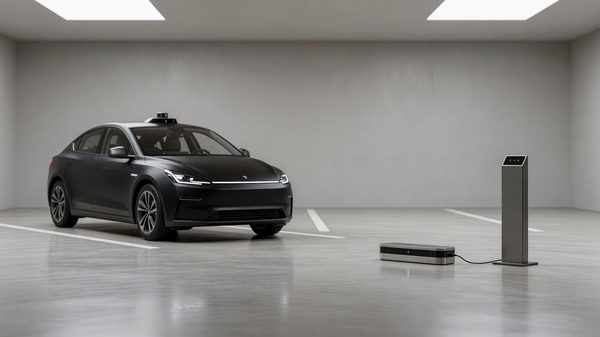
In-ground magnetic. Detects the vehicle’s magnetic signature from beneath the stall. Works outdoors in any weather, needs no overhead structure, and is per-stall accurate by construction. Costs are dominated by pavement work and by the replacement cycle. Best fit: surface lots and open decks where there is nothing to mount to.
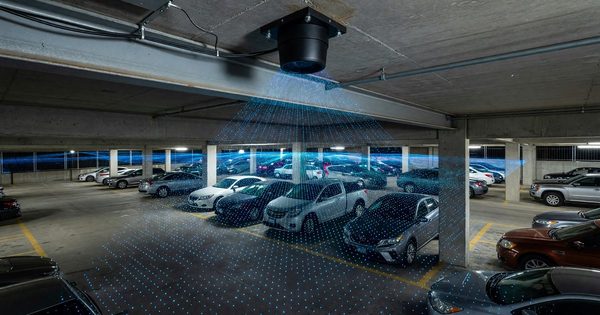
Overhead ultrasonic. Emits sound downward and measures return. Reported accuracy above 97% in controlled indoor conditions, and the indoor qualifier is doing real work — ultrasonic performance degrades with airflow, temperature gradients, and contamination. Usually paired with a per-stall indicator light, which is a substantial part of its value in a garage and a reason to compare it against camera systems on guidance rather than on occupancy data alone. Best fit: enclosed structures with a ceiling at a consistent height.
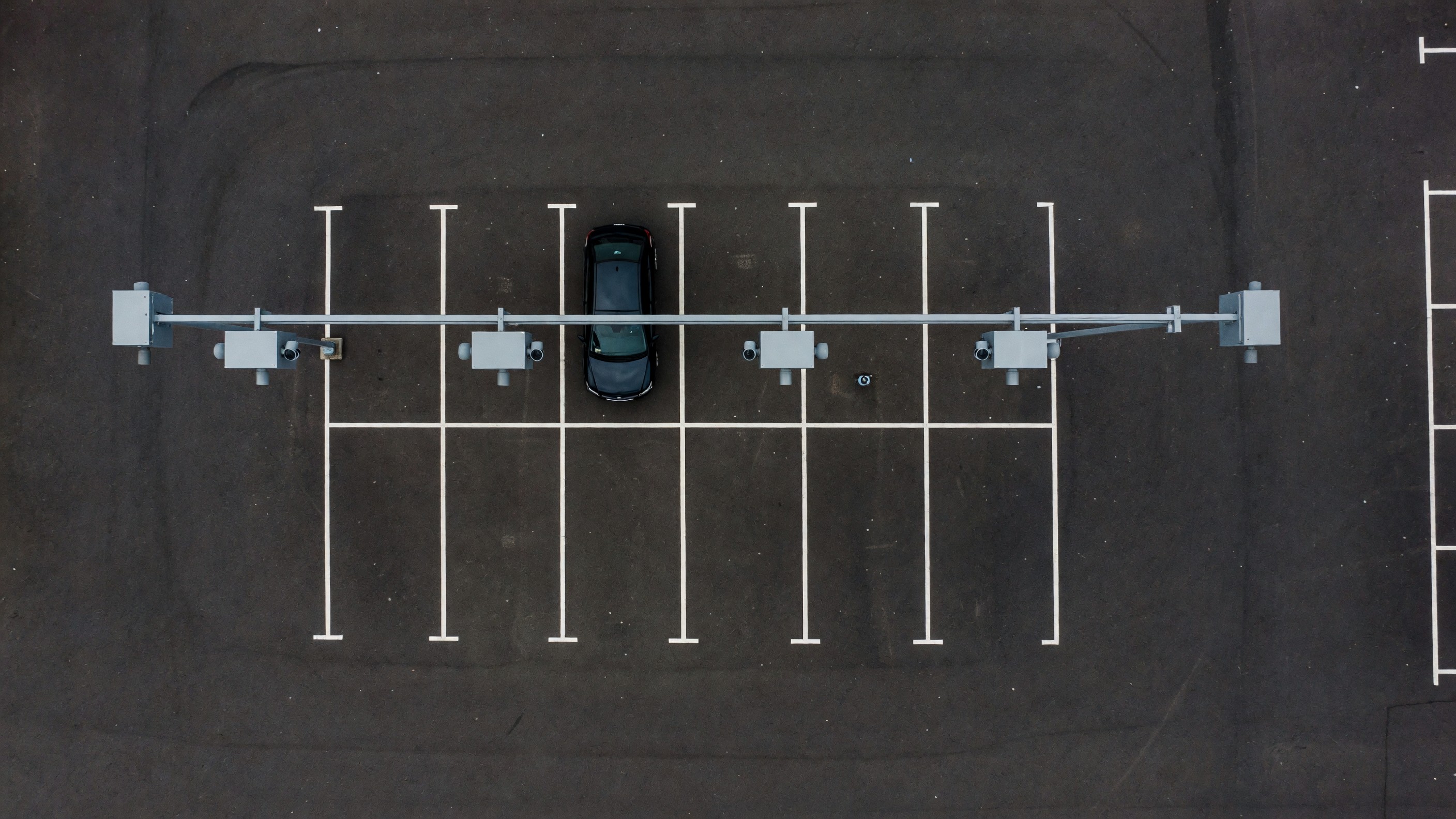
Camera-based. One device covers a group of stalls, and the same feed can support LPR, guidance, and security. The strongest cost profile at density and the weakest at sparsity. Real constraints: sightlines determine everything, and a mispositioned camera loses a whole group rather than one stall. Occlusion by high-profile vehicles, low light, and lens contamination are the recurring failure modes. Best fit: dense structures with clean sightlines and an appetite for the additional analytics.
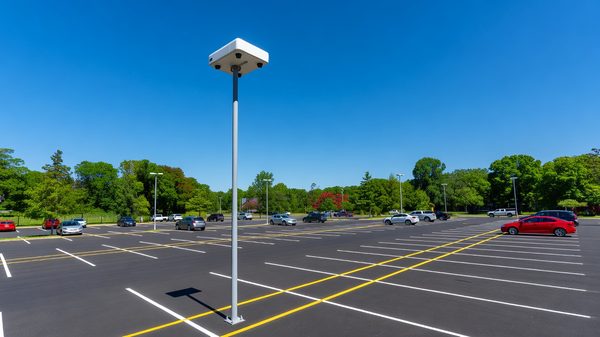
Radar. Radio-wave detection, materially more resistant to weather and contamination than ultrasonic, which is why it has been displacing ultrasonic in exposed applications. Middle hardware cost, and the vendor-quoted “system” pricing in the thousands typically covers a multi-stall unit rather than a single space — a common source of apples-to-oranges comparison in bid tabs. Best fit: exposed decks and curbside where weather robustness matters and pavement work is undesirable.
The Comparison Question Bids Rarely Answer
Occupancy accuracy claims are all quoted in the high nineties, by everyone, so the number is not discriminating. Three questions produce more useful separation:
- Accuracy under what conditions, measured how, over what period? A 98% figure from a controlled pilot in one garage is not a service level. Ask for the measurement methodology and whether the vendor will contract to it.
- What is the false-vacancy rate specifically? A sensor that reports occupied when empty annoys a guidance user. One that reports vacant when occupied sends a driver to a taken stall and destroys trust in the whole system. These are not symmetrical failures and should not be reported as one accuracy percentage.
- What is the seven-year total, including battery or unit replacement and all recurring fees? This reorders the technologies in most bids, and it is the reordering that matters.
Deployed at Scale Versus Piloted
All four technologies are in production somewhere, which is different from all four being proven for your case. In-ground magnetic and camera-based systems have the longest large-deployment track records. Radar has grown quickly in exposed applications on genuine technical merit. The AI-analytics layer sold on top of any of them is in much earlier adoption than the sensing itself — 2026 survey work across urban operators shows large majorities piloting or deploying AI-assisted occupancy forecasting, and forecasting from a pilot is not the same as operating on it.
The practical procurement move: pick the sensing technology on installation reality and seven-year cost, contract for a measured false-vacancy rate rather than a marketing accuracy figure, and treat the analytics layer as a separate decision you can make later on a platform that will export its raw data. Buy the sensing you can maintain; the intelligence on top of it is replaceable, and the holes in your pavement are not.
Cross-check any per-space figure in a bid against IPMI published guidance and against a reference site of comparable size and construction — vendor case studies are selected, and the reference call is where the installation cost surprises surface.