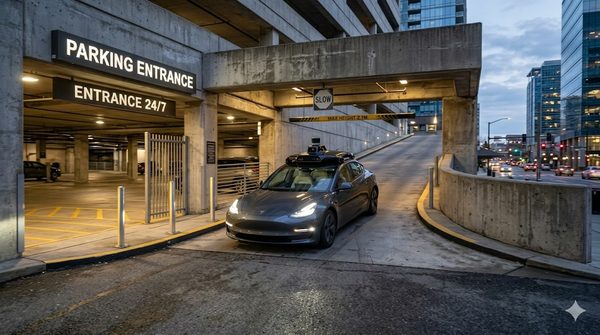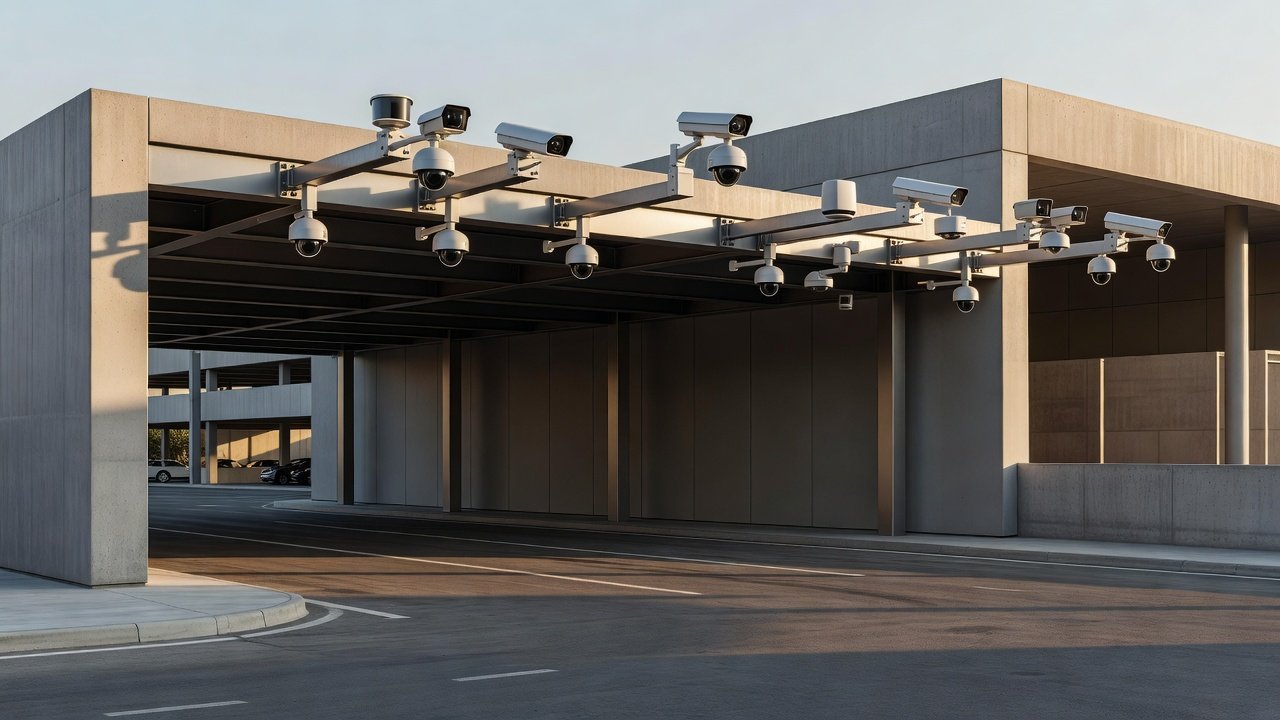
The United States has been running an uncoordinated autonomous vehicle experiment for a decade. Individual states built their own testing frameworks, deployment rules, and reporting requirements, producing a patchwork that made multi-state AV operations legally complex and operationally expensive. The SELF DRIVE Act of 2026 — Safely Ensuring Lives Future Deployment and Research In Vehicle Evolution — is the federal government’s most substantial attempt to impose a unified framework on that patchwork.
For parking operators, the legislation’s direct text says little about facility design. The indirect implications are significant. The bill’s architecture — who regulates what, how quickly manufacturers can deploy, and what infrastructure AV operations require — shapes the planning horizon every parking facility manager should be working against.
What the SELF DRIVE Act Actually Does
Introduced in the 119th Congress and advanced by the House Committee on Energy and Commerce in February 2026, the SELF DRIVE Act establishes federal authority over automated driving system (ADS) design, construction, and performance while leaving traffic enforcement, vehicle registration, and licensing at the state level.
The bill’s core mechanism is the safety case: manufacturers seeking to deploy ADS-equipped vehicles must submit a safety case to the National Highway Traffic Safety Administration (NHTSA) demonstrating that their system operates safely across its intended operational design domain. Once a safety case is on file, the bill prohibits states and localities from enacting or enforcing regulations that “prohibit or partially prohibit” deployment of vehicles with that ADS on record.
This federal preemption provision is the most contested element of the legislation. California, which built its own AV testing and deployment framework through the Department of Motor Vehicles, has invested substantially in its regulatory infrastructure. The SELF DRIVE Act would effectively subordinate California’s performance requirements to NHTSA’s, while leaving California’s authority over insurance, traffic enforcement, and registration intact.
The bill also permits AV trucks to carry revenue freight commercially while manufacturers continue safety validation work — closing a gap that previously required unpaid test miles indefinitely before commercial authorization.
The House passed a framework for commercial AV trucks under the Act in June 2026. The legislation continues to advance through the Senate as of this writing.
What the Bill Does Not Address: Parking Infrastructure
The SELF DRIVE Act is a vehicle safety and deployment statute. It says nothing specific about parking facility design, minimum stall dimensions, drop-off zone requirements, or access control system standards for AV operations.
This silence is itself a design implication. The bill creates the conditions for wider AV deployment without mandating that parking infrastructure accommodate it. The result is that facilities designed and built in the 2026-2030 window will be expected to serve a vehicle mix that ranges from conventional human-driven cars to SAE Level 3 and Level 4 vehicles that operate without a driver inside the parking area.
Two design domains are affected in ways that require attention now even without a federal mandate:
Vehicle-to-Infrastructure (V2I) communication at access points. AV fleets operating in commercial service — robotaxis, shared mobility vehicles, last-mile delivery trucks — need machine-readable gate authorization. There is no human to swipe a card, scan a phone, or enter a PIN. Facilities that want to serve AV fleet operators need gate controllers with V2I or API-accessible authorization channels. This is infrastructure that must be specified during construction or major renovation; it cannot be economically added as an afterthought to a poured-concrete structure.
Drop-off and retrieval geometry. AV passenger vehicles operating under an app-dispatch model deliver passengers to the facility entrance and then park themselves, or retrieve passengers from a designated pickup point rather than the stall where they parked. Facilities designed with a single mixed-use drop-off lane — the same path that valet, rideshare, and accessible loading share — will face operational conflicts as AV traffic increases. Separating AV drop-off and retrieval from other curbside activity is a geometry problem that must be solved in the site plan.
State Preemption and What It Means for Permit Timelines
The SELF DRIVE Act’s federal preemption provision does not override local zoning or building codes. A state that is prohibited from blocking AV deployment on performance grounds can still require building permits, zoning variances, and infrastructure certifications through its normal land use process.
This matters for parking developers because the AV fleet operators most likely to lease dedicated facilities or negotiate volume access agreements — Waymo, Cruise, May Mobility, and fleet electrification programs — are already operational in cities with AV-favorable regulatory environments. Phoenix, San Francisco, and Austin have mature AV operations; the SELF DRIVE Act accelerates the expansion of AV operations into cities with previously restrictive frameworks.
Facilities in those secondary markets — cities that previously had state-level AV deployment restrictions the SELF DRIVE Act would preempt — may see AV fleet operator interest sooner than their planning timelines assumed. The parking infrastructure decisions being made today in cities like Chicago, Seattle, and Dallas are being made in a regulatory environment that is about to change.
The Design Standard Gap
No formal AV-specific parking design standard currently exists in US building codes. The International Building Code, the International Fire Code, and the major state equivalents all use stall dimensions, aisle widths, and ramp grades calibrated for human-operated vehicles. The standard 9-foot-by-18-foot stall paired with a 24-foot two-way drive aisle reflects the maneuvering envelope of a human driver with moderate skill.
Research on AV parking geometry suggests that autonomous vehicles can operate reliably in narrower configurations — reduced to 7.5-foot stalls and 20-foot aisles in some simulation studies — because precision parking eliminates the door-swing and maneuvering buffer that human drivers require. A facility designed with AV-compatible geometry could accommodate 15 to 25 percent more vehicles in the same footprint, a meaningful economic improvement in land-constrained urban markets.
The gap between what the research suggests is achievable and what building codes permit creates a planning problem for developers. Facilities breaking ground in 2026 will be served by building codes that may not reflect AV geometric realities for another five to ten years. The practical response is designing for flexibility: concrete structures with wider-than-minimum aisle widths and modular interior configurations that can be reconfigured as code evolves, rather than optimizing the current design for the minimum dimensions code currently requires.
AV Accessibility Implications
One dimension of AV parking design that the SELF DRIVE Act indirectly touches is accessibility. The bill’s preemption language covers ADS performance requirements, not ADA compliance, which remains a separate federal framework.
However, AV operations create an unresolved question about accessible parking stalls. The existing ADA standard requires accessible stalls near facility entrances with specific van-accessible aisle widths. The rationale is that passengers with disabilities require adjacent space to deploy ramps, transfer to wheelchairs, and navigate to the entrance on foot.
An AV passenger vehicle serving a mobility-impaired rider can drop that rider at the accessible entrance before parking itself, eliminating the need for an accessible stall at the entrance. But until building codes are updated to recognize AV-assisted drop-off as an equivalent accommodation, ADA-mandated stall ratios remain a legal requirement regardless of what the vehicles in the lot are capable of doing.
Facilities planning AV-compatible infrastructure should document this gap in their design narrative and ensure that accessible stall compliance is maintained under current code while the physical infrastructure accommodates future reconfiguration as codes evolve.
What Parking Operators Should Be Doing Before the Act Is Fully Implemented
The SELF DRIVE Act is moving through the legislative process, not yet fully implemented. The operational window before AV fleet operators begin knocking on facility managers’ doors in secondary markets may be two to four years in most US cities outside the leading deployment markets.
That window is not long enough to build a new parking structure — but it is long enough to make the right choices in structures currently under design:
Specify V2I-capable gate hardware. Any access control system specified in 2026 should include at minimum an API-accessible controller that can receive machine-readable authorization credentials. Dual-mode hardware supporting both RFID/LPR and V2I protocols is commercially available from the major access control vendors. The incremental cost over legacy hardware is modest compared to the cost of retrofitting after concrete is poured.
Reserve conduit and power positions for RSU antennas. Roadside unit antennas for V2X communication need mounting positions with clear sightlines to the entry envelope — typically the first 300 meters of approach road or the ramp entry. Designating and roughing in antenna mounts and conduit paths during construction costs a few thousand dollars. Adding them post-construction in a concrete structure costs orders of magnitude more.
Separate AV drop-off geometry in site planning. Any surface lot or structure being designed for urban mixed use should include a designated AV pull-through drop-off lane separated from accessible loading and rideshare activity. This is a site plan decision, not a construction cost issue; getting the geometry right during design costs nothing.
Engage with local AV pilot programs. Most cities with active AV fleet operator programs maintain operator liaison contacts through their transportation or public works departments. Establishing a relationship before AV operators are actively looking for facility agreements positions your property as a known quantity when demand materializes.
The SELF DRIVE Act does not mandate any of this. It creates the regulatory environment in which AV operations will scale faster and in more markets than the previous state-by-state patchwork allowed. Parking facilities that anticipate that scaling will be positioned to serve the fleet operators who follow.
Further Reading
- SELF DRIVE Act of 2026 — H.R.7390 Full Text — primary legislative source
- Eno Center for Transportation — 2025 AV Federal Policy Wrapped — policy context and legislative history
- Smart Cities Dive — AV Bill Committee Progress — state preemption analysis
- NCSL — Autonomous Vehicles Enacted Legislation — state-by-state AV law tracker