The connector question looks settled and is not. Ford announced NACS adoption first; GM, Rivian, Hyundai, Kia, Honda, Nissan, Mercedes-Benz, Volvo and effectively every other automaker selling EVs in the United States followed. Read the announcements and the transition is complete.
Look at what is being delivered and it is not. The switch is happening model by model, on each automaker’s own timeline, and there are millions of CCS1 vehicles already on the road that will not change connector.
For a parking facility with CCS-only chargers, that gap between announcement and delivery is the entire planning problem. The announcements say your hardware is obsolete. The installed base says it will serve paying customers for the better part of a decade.
The three timelines that matter, and they are different
New vehicle sales. Transitioning, unevenly, model by model rather than brand by brand. An automaker “adopting NACS” means new models get the port as they refresh, not that the fleet switches on a date.
Installed vehicle base. This is the one that determines your utilisation, and it moves at the speed of fleet turnover — roughly a decade to substantially replace. CCS1 vehicles bought in 2024 and 2025 will be looking for charging in 2034.
Charging infrastructure. Already hedged. Most new DC fast chargers from the major networks ship with dual cables carrying both CCS and NACS. NEVI-funded sites must offer CCS1 connectors, and many add NACS.
The infrastructure side resolved this faster than either vehicle timeline, which tells you what the industry consensus actually is: dual-connector for the duration of the transition, not a switchover.
What this means by charger type
The answer is different for Level 2 and DC fast, and conflating them produces bad decisions.
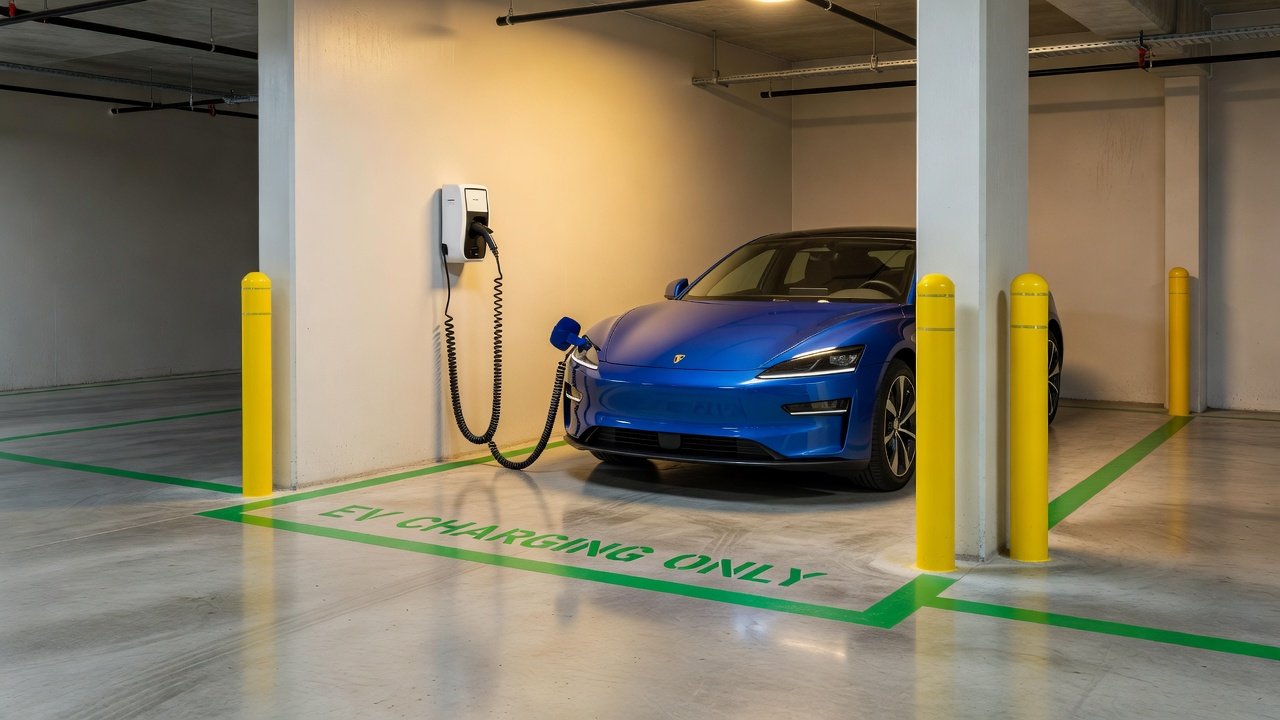
Level 2 — the connector is nearly a non-issue. The overwhelming majority of parking-facility charging is Level 2, and Level 2 is where adapters work well. J1772-to-NACS and NACS-to-J1772 adapters are inexpensive, widely available, and mechanically unproblematic at Level 2 power. A Level 2 installation with J1772 connectors serves both populations today, with the adapter carried by the driver. Replacing working Level 2 hardware for connector reasons alone is difficult to justify.
DC fast — the connector matters, and adapters are the weak point. At DC fast power levels, adapters carry real constraints, so you cannot count on drivers bridging the connector gap themselves the way they do at Level 2. Some networks solve it on the charger side - Tesla’s Magic Dock adds CCS at selected Supercharger sites - but that is not something a parking facility can lean on. If you operate DC fast charging, connector strategy is a genuine capital question.
Most parking facilities are in the first category and are being sold solutions for the second.
The retrofit decision, framed usefully
Three positions, and the right one depends on your hardware’s remaining life.
Chargers under five years old, working: do nothing beyond confirming that your network’s driver communications tell people adapters work. The cost of replacement is not recoverable from the marginal sessions it would capture.
Chargers approaching end of life or due for replacement: specify dual-connector DC fast, or cable-swappable hardware where the manufacturer offers it. The incremental cost at purchase is modest; retrofitting later is not. For Level 2, specify whatever is cheapest per port — the connector question resolves itself with a $30 adapter.
New installations: dual-connector on any DC fast. For Level 2, the port count matters far more than the port type. A facility with eight J1772 ports serves more drivers than one with four dual-connector ports, and the capital difference buys the additional ports.
The thing that actually limits your charging deployment
Connector choice is the most discussed variable and among the least consequential. The constraints that determine whether a parking facility’s charging programme works are, in order:
Electrical service capacity. The number of ports you can energise is set by the panel, the service, and the utility’s capacity at your transformer. This is the hard ceiling and it is expensive to raise.
Demand charges. DC fast charging in a facility with a commercial demand tariff can generate a demand charge that exceeds the session revenue. Load management and battery buffering address it; connector type does not.
Trenching and conduit. The dominant cost in most installations, and the reason to oversize conduit and pull capacity during the first installation rather than the third.
Stall turnover policy. A charging stall occupied by a fully charged vehicle for six hours earns nothing and blocks the driver who would have paid. Idle fees and enforcement determine utilisation more than hardware does.
A facility that gets those four right with J1772 ports and an adapter culture outperforms one with perfect connector strategy and a constrained service.
What to tell your board
The connector transition is real and slower than the announcements. Dual-connector is the industry’s settled answer for DC fast, and it is already the default in new hardware. Level 2 — which is what most parking facilities operate — is substantially adapter-solved and does not warrant replacement spending.
The defensible capital position is to specify dual-connector on any new or replacement DC fast charging, leave working Level 2 alone, and put the money that would have gone into connector retrofits into electrical capacity and conduit. Capacity is what limits you in 2030. Connector type will not be.